

Title : Respiratory and spirometric findings among individuals exposed to different residential radon levels in California, Santander
Abstract:
Introduction: Radon is a radioactive gas and a well-established risk factor for lung cancer. However, its association with respiratory symptoms and pulmonary functional abnormalities in populations with chronic environmental exposure remains incompletely characterized. In the municipality of California, Santander (Colombia), elevated levels of residential radon have been documented in a mining community exposed to multiple respiratory risk factors.
Objectives: To explore clinical respiratory and spirometric findings in a mining population with high exposure to radon, wood-smoke, and tobacco.
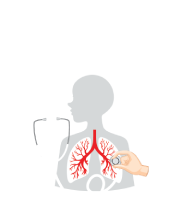
Materials and Methods: A cross-sectional study was conducted to characterize respiratory findings in La Baja, a locality within the municipality of California (Santander). The target population included 110 residents aged ≥18 years. Sociodemographic information was collected through household visits, including sex, age, and current and previous occupations, with particular emphasis on mining activities. Participants completed the Spanish version of the Ferris respiratory symptoms and risk factors questionnaire, with additional questions addressing exposure to wood smoke. A clinical examination was performed with emphasis on pulmonary auscultation. Pre- and post-bronchodilator spirometry was conducted using 200 µg of inhaled salbutamol with a portable spirometer, following American Thoracic Society recommendations. Residential radon exposure was estimated through indoor household measurements. Associations between exposure variables, respiratory symptoms, and spirometric abnormalities were assessed using logistic regression models.
Results: A total of 110 participants were included, of whom 105 had interpretable spirometry. The mean age was 45.6 years (SD 15.3). The mean duration of residence in La Baja was 23.3 years (SD 19.9). Habitual cough was reported by 25% of participants, of whom 48% corresponded to chronic cough. Undiagnosed asthma was identified in 15% of participants. COPD was present in 9% based on clinical diagnosis and in 7.6% according to spirometric criteria. Exposure to cigarette smoke was reported in 46% of participants, wood-smoke exposure in 70%, and 72% of the population reported employment in mining. Additionally, 61.8% reported occupational exposure to dust, and 37.3% presented clinically significant dyspnea (mMRC ≥1). Abnormal spirometry was observed in 10.5% of participants, and bronchodilator reversibility was present in 8.7%. Pulmonary auscultation abnormalities were found in 50% of participants, with fine crackles accounting for 54% of these findings. In the univariate analysis for dyspnea (mMRC ≥1), an association was observed with longer duration of residence in the community (OR 1.025; 95% CI 1.005–1.046; p=0.014), as well as a trend toward association with occupational dust exposure (OR 2.225; 95% CI 0.962–5.143; p=0.061).
Conclusions: Multiple environmental and occupational exposures converge in the community of La Baja. The observed association between longer duration of residence and dyspnea may reflect cumulative effects of radon exposure and other respiratory risk factors. Additionally, the migration of ill individuals toward urban areas suggests the presence of a potential bias similar to the healthy worker effect.

