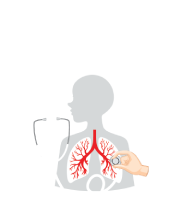
2nd Edition of International Conference on Advanced Pulmonology, Respiratory Medicine & Lung Health
June 28-30, 2027 | Rome, Italy

Emphysema management
Emphysema, a key manifestation of chronic obstructive pulmonary disease, continues to pose significant clinical challenges due to its irreversible destruction of alveolar tissue and progressive decline in respiratory function. The emphasis in emphysema management is not solely on symptom relief but also on preventing exacerbations, preserving lung function, and enhancing quality of life. Smoking cessation is the single most effective intervention, supported by pharmacologic measures including bronchodilators, inhaled corticosteroids, and phosphodiesterase-4 inhibitors. Pulmonary rehabilitation provides additional benefits by improving exercise tolerance, reducing dyspnea, and enhancing overall functional status. For advanced disease, long-term oxygen therapy, surgical interventions such as lung volume reduction surgery, and newer bronchoscopic procedures offer viable options. Recent innovations extend to minimally invasive techniques and regenerative therapies, exploring the possibility of tissue restoration. Digital platforms and wearable monitors are increasingly integrated to track patient status, encourage adherence, and enable remote adjustments to therapy. Personalized treatment strategies based on phenotypes and biomarkers are also gaining importance, allowing clinicians to tailor care to individual disease patterns. As research deepens understanding of pathophysiology and genetics, the scope of emphysema management is shifting from purely supportive interventions to proactive, precision-based approaches that address disease heterogeneity, reduce healthcare utilization, and ultimately improve long-term survival outcomes.

Saurabh Chattopadhyay
University of Kentucky, United States
Yazdan Mirzanejad
University of British Columbia, Canada
Constantinos Mikelis
University of Patras, Greece
Sai Lakkimsetti
Lakeside High School, United States
Mariano Votta
Active Citizenship Network (Cittadinanzattiva), Italy
Vijayan Gurumurthy Iyer
Techno-Economic-Environmental Study and Check Consultancy Services, India
K R Aneja
Kurukshetra University, IndiaSubmit your abstract Today


Title : Global warming and increasing respiratory illnesses
Yazdan Mirzanejad, University of British Columbia, Canada
Title :
Saurabh Chattopadhyay, University of Kentucky, United States
Title : Risk factors for mycobacterium avium complex infections in patients with chronic obstructive pulmonary disease
Alizaman Sadigov, Medical University, United States
Title : Managing integration and interoperability in transformed pulmonology, respiratory medicine and lung health ecosystems
Bernd Blobel, University of Regensburg, Germany
Title : Personalized and Precision Oncology (PPO) to be set up via precision oncology strategy for cancer care team: Developing targeted lung cancer therapy and advancing personalized cancer care
Sergey Suchkov, N.D. Zelinskii Institute for Organic Chemistry of the Russian Academy of Sciences & InMedStar, Russian Federation
Title : Advancements in pulmonology and respiratory care through the view of Personalized and Precision Medicine (PPM) and biodesign-driven translational applications
Sergey Suchkov, N.D. Zelinskii Institute for Organic Chemistry of the Russian Academy of Sciences & InMedStar, Russian Federation