2nd Edition of International Conference on Advanced Pulmonology, Respiratory Medicine & Lung Health
June 28-30, 2027 | Rome, Italy

Small airways disease
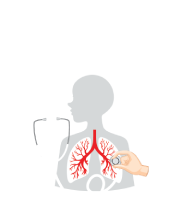
Small airways disease involves dysfunction or obstruction of the bronchioles, the smallest conducting airways in the lungs, and can significantly impair airflow and gas exchange. It may arise from chronic inflammatory conditions, environmental exposures, infections, or autoimmune processes. Patients often present with subtle early symptoms, such as persistent cough, wheezing, or exertional shortness of breath, making early detection challenging. Pulmonary function tests, high-resolution imaging, and clinical evaluation are essential for accurate diagnosis. Because the disease affects distal airways, conventional imaging may underestimate its extent, highlighting the need for advanced diagnostic tools and careful longitudinal monitoring.
Management focuses on addressing underlying causes, reducing inflammation, and preserving lung function. Pharmacologic therapy may include inhaled corticosteroids, bronchodilators, and anti-inflammatory agents tailored to patient-specific disease patterns. Environmental and lifestyle modifications, including avoidance of pollutants and smoking cessation, are essential preventive strategies. Pulmonary rehabilitation and breathing exercises help maintain airway function and improve exercise tolerance. Regular follow-up with pulmonologists allows adjustment of therapy and early intervention during exacerbations. Emerging research into small airway imaging and molecular markers promises to enhance personalized approaches to diagnosis and treatment, making small airways disease management increasingly precise and proactive.

Saurabh Chattopadhyay
University of Kentucky, United States
Yazdan Mirzanejad
University of British Columbia, Canada
Constantinos Mikelis
University of Patras, Greece
Sai Lakkimsetti
Lakeside High School, United States
Mariano Votta
Active Citizenship Network (Cittadinanzattiva), Italy
Vijayan Gurumurthy Iyer
Techno-Economic-Environmental Study and Check Consultancy Services, India
K R Aneja
Kurukshetra University, IndiaSubmit your abstract Today


Title : Global warming and increasing respiratory illnesses
Yazdan Mirzanejad, University of British Columbia, Canada
Title :
Saurabh Chattopadhyay, University of Kentucky, United States
Title : Risk factors for mycobacterium avium complex infections in patients with chronic obstructive pulmonary disease
Alizaman Sadigov, Medical University, United States
Title : Managing integration and interoperability in transformed pulmonology, respiratory medicine and lung health ecosystems
Bernd Blobel, University of Regensburg, Germany
Title : Personalized and Precision Oncology (PPO) to be set up via precision oncology strategy for cancer care team: Developing targeted lung cancer therapy and advancing personalized cancer care
Sergey Suchkov, N.D. Zelinskii Institute for Organic Chemistry of the Russian Academy of Sciences & InMedStar, Russian Federation
Title : Advancements in pulmonology and respiratory care through the view of Personalized and Precision Medicine (PPM) and biodesign-driven translational applications
Sergey Suchkov, N.D. Zelinskii Institute for Organic Chemistry of the Russian Academy of Sciences & InMedStar, Russian Federation